Shower head water filter: how it works
A shower head water filter puts filtration inside the head itself, so there is nothing extra hanging off your shower arm and nothing to plumb in. This guide explains exactly what it captures, what it cannot capture, what it costs to run, and how to pick one that does not kill your pressure.
Last updated September 2026Written by the IonDrops product team 4.8/5 rated
The water path, step by step
- Inlet and mesh screen. Coarse rust, grit and pipe scale are trapped before they can reach the media, so the media is not wasted on debris a screen can hold.
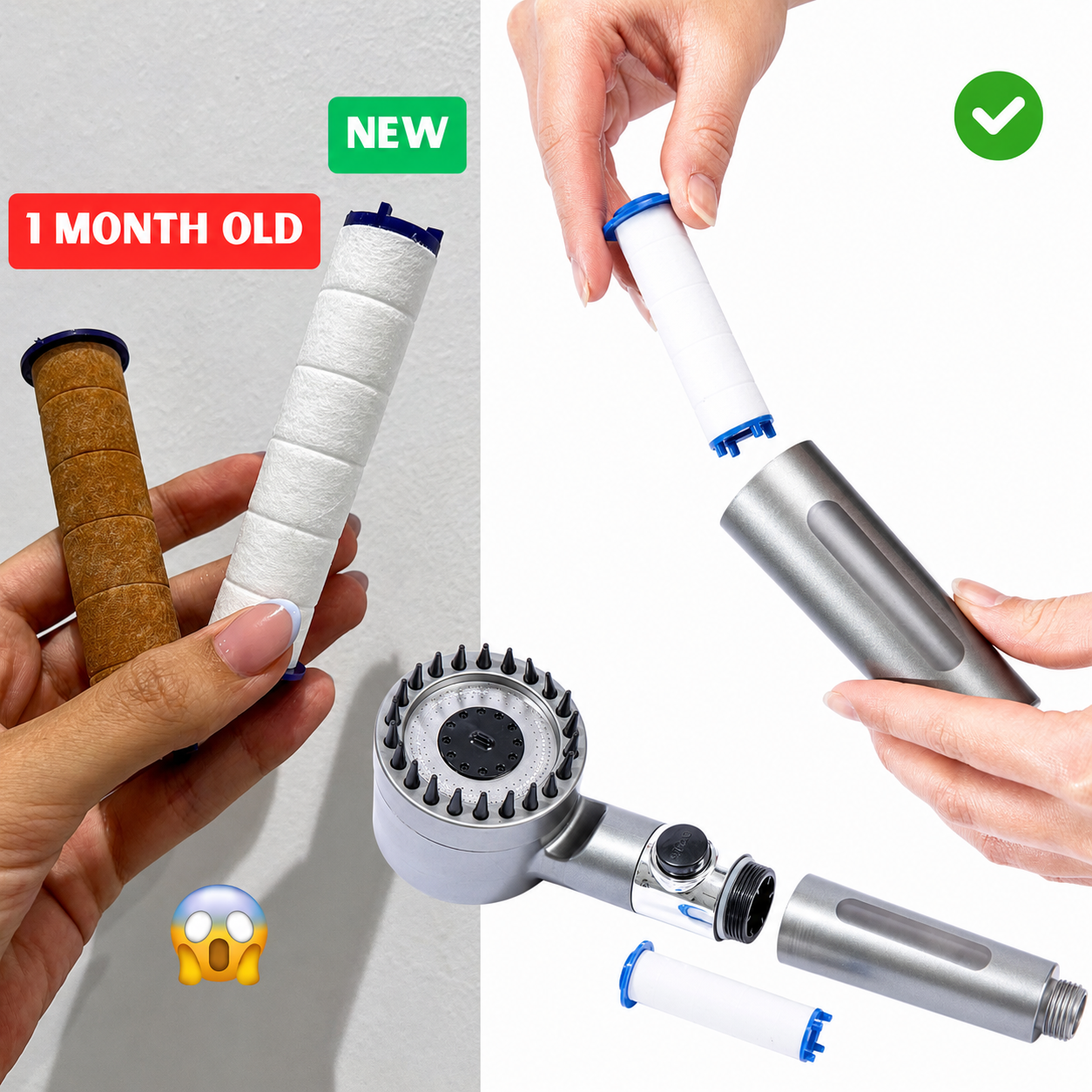
- Media cartridge. Fine sediment is captured and chlorine taste and odour are reduced. This part is consumable and swaps out in seconds.
- Nozzle plate. Filtered water exits through narrowed nozzles, which raises velocity so the spray feels strong despite lower total flow.
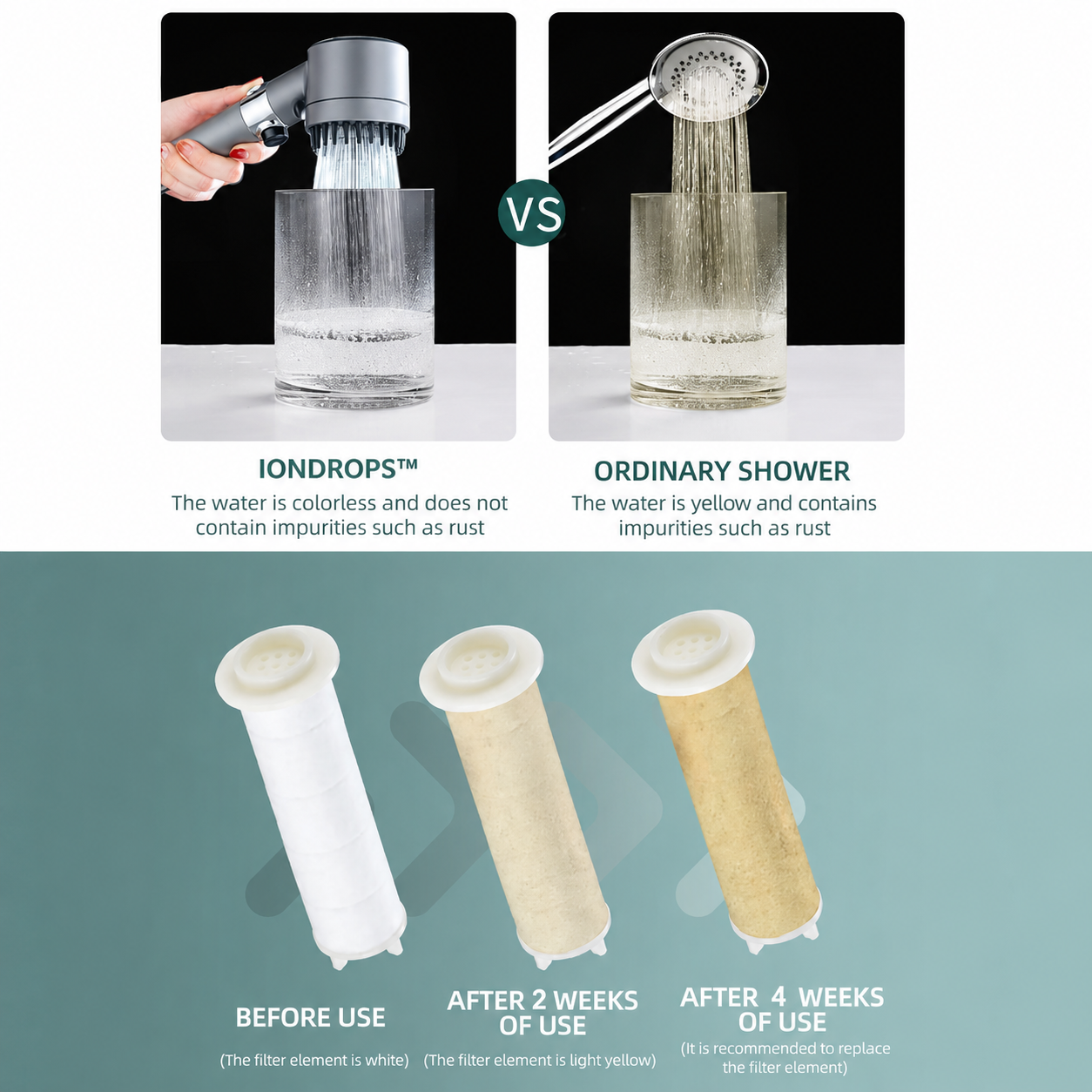
The order matters. A filter placed after the outlet cannot protect the nozzles, which is why unfiltered heads slowly clog and lose pressure while a filtered head stays consistent.
What it removes — and what it doesn't
| Contaminant | Filtered shower head | Why |
|---|---|---|
| Rust and pipe flakes | Yes | Held by the inlet mesh screen |
| Sand, grit and sediment | Yes | Captured by the media bed |
| Chlorine taste and odour | Reduced | Media contact as water passes through |
| Scale build-up inside the head | Prevented | Debris never reaches the nozzles |
| Dissolved hardness minerals | No | Ion exchange is needed — that is a softener |
| Bacteria, drinking-water purification | No | Not designed or certified for potable water |
Filter types compared
| Type | Pros | Cons |
|---|---|---|
| Filtered shower head (cartridge inside) | One part, fast fit, replaceable media, can boost pressure | You replace the whole head |
| Inline filter canister | Keeps your existing head | Bulky, two purchases, often lowers pressure |
| Mineral-bead head (no cartridge) | Cheap, nothing to replace | No replaceable media, so nothing measurable is captured |
| Whole-home softener | Genuine softening at every tap | $800–$3,000, plumber, owners only |
Cartridge life and real cost
Plan on about four weeks per cartridge with daily use; heavier use or harder water shortens that. IonDrops replacement cartridges are $14.99 for a 2-pack — roughly $7.50 a month — and every shower head ships with one already installed. You can add a 2-pack at checkout, which saves waiting on a second delivery a month later.
| Line item | Cost (USD) |
|---|---|
| IonDrops shower head, single | $29.99 + $4.99 shipping |
| Bundle price per head (4-pack) | $17.49, free shipping |
| Cartridges, 12 months of one daily shower | ≈ $89.94 (six 2-packs) |
| Running cost per shower | ≈ 25–30 cents |
Does it hurt water pressure?
It can, on designs that add filtration without changing the outlet — that is the single most common complaint about inline filters. IonDrops compensates with a narrowed nozzle plate, which is why most customers report a stronger-feeling spray than the unfiltered head they removed, while using up to 30% less water. Felt pressure is a function of exit velocity, not total litres per minute, so a smaller outlet with the same supply pressure feels stronger.
If pressure does drop over time, the cause is nearly always a loaded cartridge. Swapping it restores flow immediately, which is a useful reminder that the cartridge is doing work.
How to choose one
- Replaceable media. If nothing comes out, nothing was captured. Insist on a cartridge you can pull and inspect.
- Cartridge price and availability. A cheap head with $30 proprietary cartridges is the expensive option after two months.
- Outlet design. Look for a narrowed nozzle plate if your pressure is already weak.
- Standard 1/2-inch thread. Anything else means adaptors or a plumber.
- A real returns window. Water varies by street; you want the option to send it back. IonDrops gives you 90 days, money back.
Fitting and maintenance
- Fits standard 1/2-inch shower arms — hand-tighten, no tools, no plumber.
- Use the washer supplied and finger-tighten only; over-tightening causes drips.
- Flush for 20–30 seconds after fitting a fresh cartridge.
- Swap the cartridge when it visibly darkens or flow starts to soften.
- Wipe the silicone nozzles occasionally to keep the spray even.
Step-by-step with photos: how to install IonDrops in about 60 seconds.
Signs you need one
- Orange or brown staining in the shower tray or on the tiles.
- A chlorine smell that is stronger in hot water.
- White crust building on the nozzles within weeks of cleaning.
- Skin and hair feeling tight, filmy or dull after showering.
- Pressure that faded gradually rather than suddenly.
Keep reading
Frequently asked questions
Do shower head water filters really work?
Yes, within a defined scope. A cartridge-based filtered shower head traps rust, sand, grit and pipe sediment, and reduces chlorine taste and odour. You can verify it yourself: pull the cartridge after four weeks of daily use and look at what it caught. What it cannot do is remove dissolved hardness minerals — that requires a water softener.
How often do you change a shower head water filter?
About every four weeks with daily household use. Harder water, more people or longer showers shorten that. Change it sooner if the cartridge is visibly dark or flow starts to soften. IonDrops replacement cartridges are $14.99 for a 2-pack, roughly $7.50 a month.
Does a filtered shower head reduce water pressure?
It can on designs that add filtration without changing the outlet. IonDrops compensates with a narrowed nozzle plate that raises exit velocity, which is why most customers report a stronger-feeling spray than the head they removed while using up to 30% less water.
Will it fit my shower?
It fits standard 1/2-inch threaded shower arms, which is the common fitting in the US, UK, EU, Australia and most other markets. It hand-tightens with the washer supplied and needs no tools or plumber. It does not fit rain heads plumbed into the ceiling or fixed body jets.
Is filtered shower water safe to drink?
No. A shower filter is designed for skin and hair contact water, not for drinking-water purification. It does not remove bacteria and is not certified for potable use.
Do I need a filter if I already have a softener?
Usually not for hardness, but a filter still catches rust and sediment from your own pipework downstream of the softener, and reduces chlorine odour if your utility chlorinates.
Questions before you order? Read our shipping times, returns process and 90-day guarantee, or contact our team.